 Untilfree
What Does It Really Cost in Hours of Your Life?
A price tag is in money. You pay it in time. Seeing a purchase as hours of work — or as days of freedom — is one of the simplest ways to spend on what you really want.
Why time changes the question
"$1,200" is just a number. "Fifty hours of work" is more than a full working week. The second version makes you ask a better question: is this worth a week of my life? Often the answer is still yes — and that is fine. The point is to buy on purpose, not on autopilot.
Use take-home pay, not the headline salary
Your real hourly value is what lands in your account, after tax and deductions, divided by the hours you actually put in. Commuting, unpaid overtime and work costs make it lower still. Most people find their true hourly value is well below what their contract suggests.
Sam takes home $24 an hour. A $1,200 laptop costs him 50 hours of work — more than six eight-hour days. A $6 coffee is 15 minutes. Neither is "wrong". But now he knows the price in the currency he actually spends.
A bigger version: days of freedom
Hours of work look backwards: they tell you what you already traded to earn the money. There is a forward-looking version too. If you are saving toward financial independence, every dollar you keep and invest brings that day closer. Every dollar you spend leaves it where it is, or pushes it back.
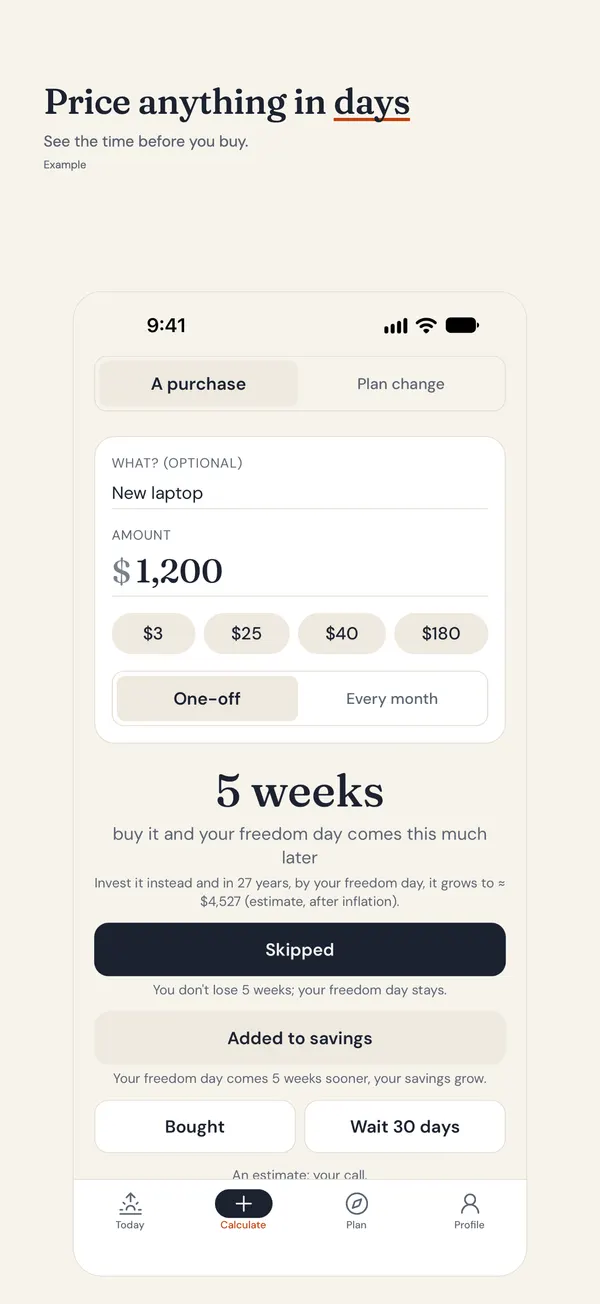
That is why the same purchase "costs" more when you are early on the road. Money kept today has decades to grow. In the example shown in Untilfree's store screenshot, a $1,200 laptop moves that person's freedom day about five weeks. Kept and invested instead, it would grow to nearly four times its price by the time they get there.
How to use it without becoming miserable
- Save it for decisions that matter. Do not price every sandwich. Use it for impulse buys, upgrades and subscriptions.
- Give yourself a "wait" option. Many unplanned wants fade in 30 days. If it is still wanted after the wait, buy it happily.
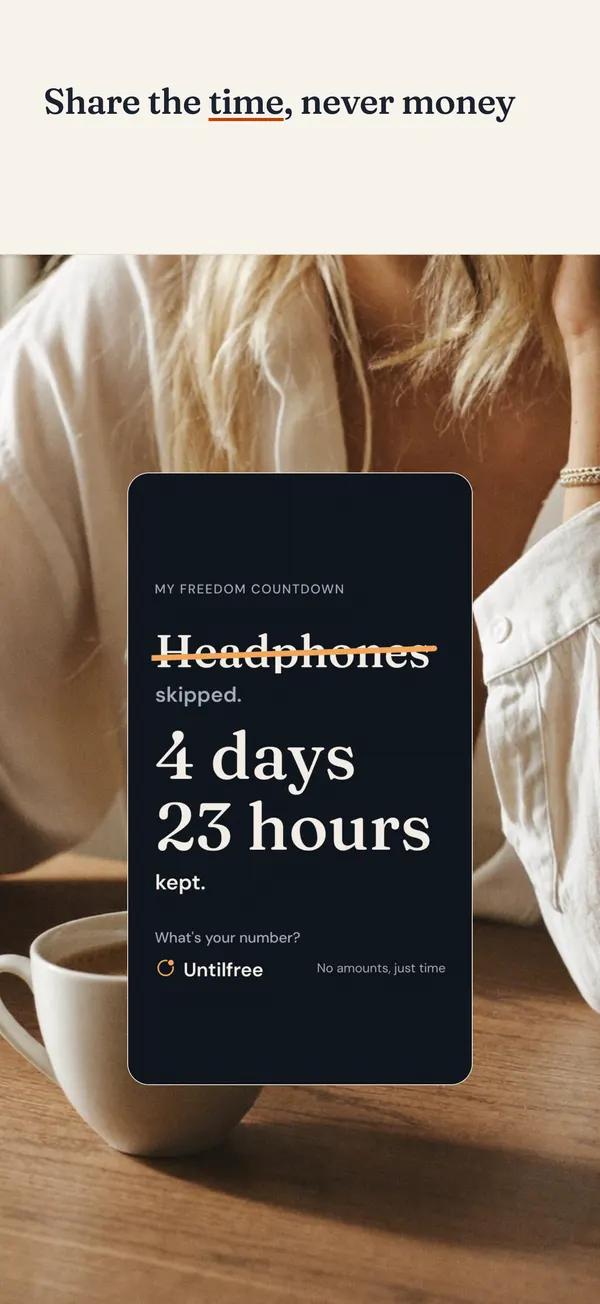
- Count the wins. When you skip something, notice the time you kept. That feeling is what makes the habit stick.
- Monthly costs weigh more. A subscription is not one price; it is a price every month. Look at it as a permanent change.
Questions people ask
How do I turn a price into hours of work?
Start from your take-home hourly pay: what you are paid after tax, spread over the hours you really work. Then compare the price with it. Untilfree goes a step further and shows the price in days of freedom.
Should I use gross or net pay?
Net, take-home pay. You spend money after tax, so the honest comparison is with what you actually receive. Including commute time makes it even more realistic.
How do I work out what my time is worth?
Take what you are paid for a period, after tax, and spread it over every hour that work takes, including travel. That is your real hourly value.
Is "is it worth it?" thinking just about saying no?
No. It is about saying yes on purpose. Seeing the real cost makes the things you do buy feel better, and the things you skip feel like wins.
Price anything in days, in seconds
Four questions — your age, savings, monthly investing and monthly spending — and Untilfree gives you a date. Then type any price into "How many days?" and see what it costs you in time before you buy.
- One-off buys and monthly costs
- "Skipped" and "Added to savings" move your date closer
- A 30-day waiting list for things you are not sure about
App Store · Free · Ads, optional Plus · No account · No bank link
Untilfree gives estimates in today’s money (after inflation). Taxes and state pensions are not included. This page is general information, not investment advice.
Published · by Srofia