 Untilfree
How Your Savings Rate Decides When You Can Retire
Your savings rate is the share of your take-home pay that you invest. For reaching financial independence, it is the most powerful number you control — more than your salary, and usually more than your returns.
Why savings rate beats salary
Your savings rate does two jobs at once. Every dollar you do not spend is a dollar invested, so the pot grows faster. And because you are living on less, the pot you need is smaller. A higher salary does not help if spending rises with it. A higher savings rate always helps twice.
Two friends each take home $5,000 a month and start from zero. One saves 25% and spends $3,750. The other saves 50% and spends $2,500. With 5% growth a year after inflation and the 4% rule, the first reaches financial independence in about 32 years. The second gets there in about 16 and a half — half the time, on the same income.
At 10%, the same income would need more than 50 years — beyond what most plans can see.
Why returns matter less than you think
Returns matter a lot once your pot is large. Early on, though, what you put in dwarfs what it earns. Nobody controls the market, but you can control what you invest each month. That is why people on the road to FIRE focus on spending first.
How to raise your savings rate without misery
- Start with the big three. Housing, transport and food usually make up most spending. One change there beats a hundred small cuts.
- Invest raises. When income goes up, send most of the increase straight to savings before you get used to it.
- Cut subscriptions you do not use. A monthly cost is permanent until you stop it.
- Automate. Invest on payday so the decision happens once.
- Keep the things you love. A plan you hate does not last. Cut what you do not care about.
Small changes, big shifts
Because the savings rate works on both sides, a few points make a real difference. Moving from 20% to 25% does not just add 5% more to your investments; it also trims the amount you will need to live on. People are often surprised that a modest change, held for years, can bring their date in by several years. The reverse is true too: lifestyle creep, where spending quietly rises with every raise, is the most common reason a plan stalls.
Measuring it honestly
Use take-home pay and count only money you invest for the long term. Retirement contributions taken from your paycheck count too — add them to both your pay and your savings so the rate is fair.
Questions people ask
What savings rate do I need to retire in 10 years?
Starting from zero, typically well over half of your take-home pay, with growth that cooperates. Existing savings shorten the road a lot.
Why does savings rate matter more than returns?
Because it works twice: it raises what you invest and lowers what you need. Returns only work on money you have already put in, which is small early on.
Is a 20% savings rate good?
It is a solid habit and well above many people. For early retirement it is a start; each extra few percent shortens the road noticeably.
How long until I am financially independent?
It depends on your savings, monthly investing and spending. Untilfree turns those three numbers plus your age into a date.
Watch your savings rate turn into a date
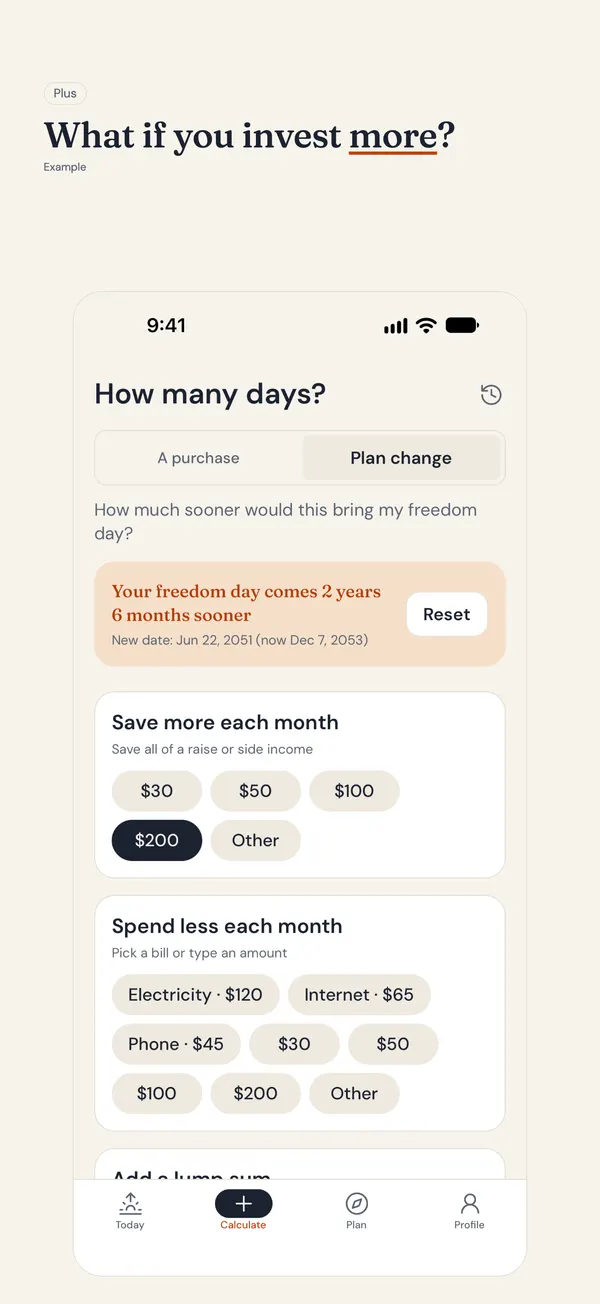
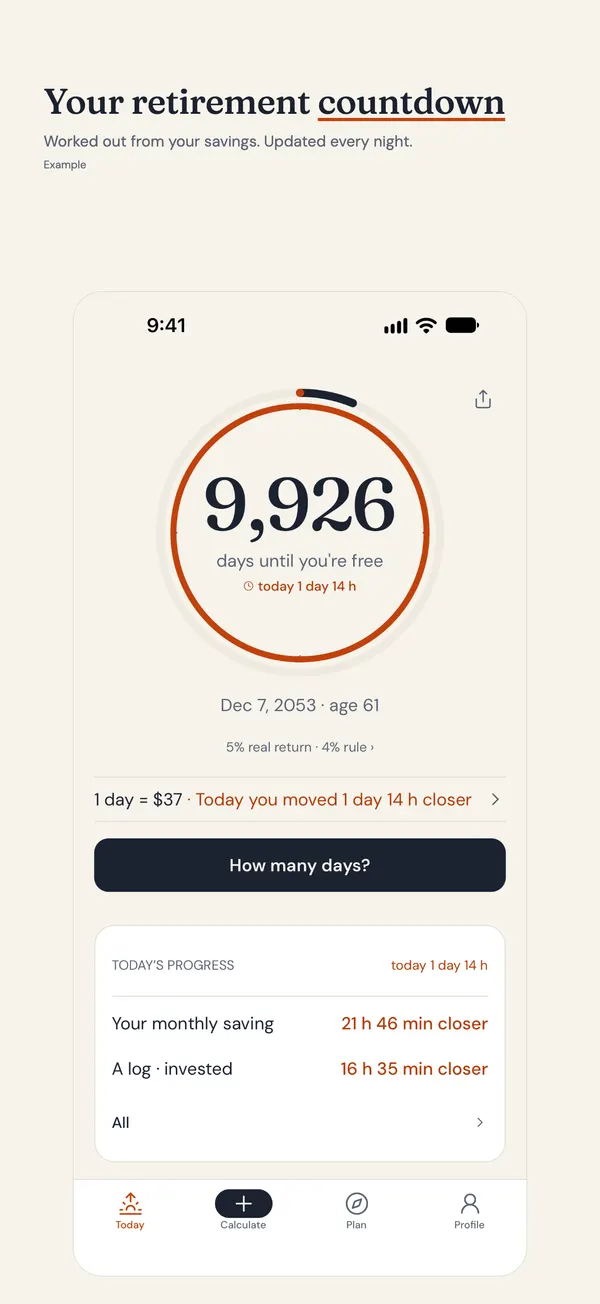
Four questions — your age, savings, monthly investing and monthly spending — and Untilfree gives you a date. Change one thing — save more, spend less — and see your freedom day move.
- A daily countdown to your freedom day
- "What if" plan changes (daily free limit, unlimited with Plus)
- Skip a purchase and the date comes closer
App Store · Free · Ads, optional Plus · No account · No bank link
Untilfree gives estimates in today’s money (after inflation). Taxes and state pensions are not included. This page is general information, not investment advice.
Published · by Srofia